

French Is Quebec’s Official Language: What the Law Means for You
French is Quebec’s only official language, a status enshrined in the Charter of the French Language (Charte de la langue française) since 1977. This means provincial government services, public signage, workplace communications, and most education from kindergarten through secondary school operate in French. The policy shapes daily life for Quebec’s eight million residents: children must attend French schools unless parents meet strict eligibility criteria, businesses with 50 or more employees must use French as the working language, and commercial signage must display French text prominently. Recent amendments under Bill 96, passed in 2022 and phased in through 2025, tighten language requirements for post-secondary studies, municipal services, and access to English-language health care. Whether you’re a newcomer planning to enroll your children in school, an employer navigating workplace language rules, or a resident wondering about your rights to English services, understanding Quebec’s language laws is essential. This guide explains the legal foundation of French as Quebec’s official language, who qualifies for English-language education, how Bill 96 affects access to services, and what these rules mean for your family and work life. For broader context on the province’s institutions and history, see About Quebec.
Quebec Context Box
Today, roughly 85% of Quebec residents can speak French, with about 79% using it as their primary home language. Montreal remains linguistically diverse, but the Charter applies province-wide, governing everything from commercial signs to school enrollment. The law requires French in public administration, court proceedings, and most workplaces, while protecting residents’ right to access services in the official language. Understanding these rules helps you navigate education options, employment requirements, and your rights when dealing with government offices across Quebec.
The Charter of the French Language: Quebec’s Core Language Law
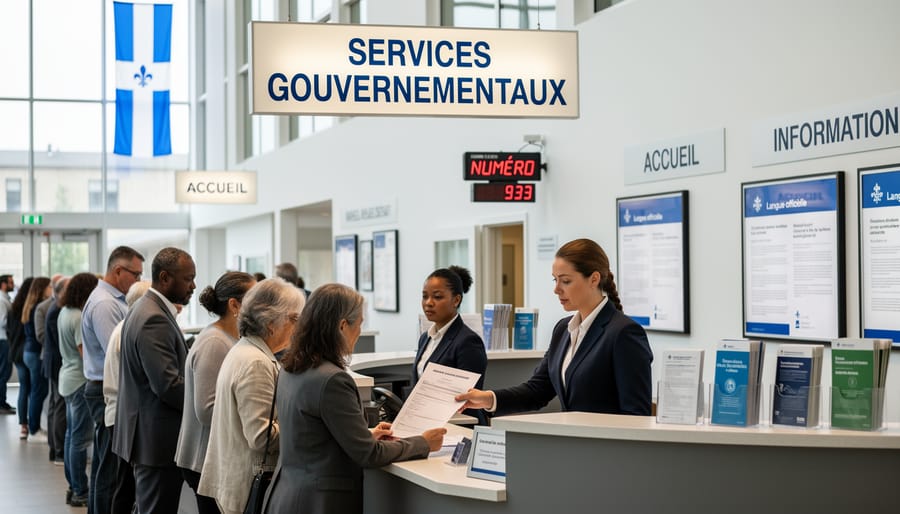
The Charter of the French Language, known as Bill 101, came into force on August 26, 1977, under the Parti Québécois government led by Premier René Lévesque. The law made French the sole official language of Quebec, reversing decades of institutional bilingualism and English dominance in business and industry.
Bill 101 covers three main areas. First, it established French as the exclusive language of the National Assembly and all government ministries, agencies, and Crown corporations. Citizens have the legal right to receive services in French from any public body. Second, the Charter regulates workplace language, requiring businesses with 50 or more employees to obtain a francization certificate proving French is the normal language of work. Third, it governs commercial signs, contracts, and product labeling, mandating French be predominant on storefronts and packaging.
The law survived multiple constitutional challenges. While the Supreme Court of Canada struck down provisions requiring French-only signs in 1988, Quebec invoked the notwithstanding clause to maintain restrictions until 1993, when it allowed bilingual signs with French predominant. Courts have generally upheld the Charter’s education provisions and workplace requirements as valid exercises of provincial jurisdiction over language and culture. The Charter remains the legal backbone of Quebec’s language policy nearly 50 years after passage.
How Language Laws Shape Education in Quebec
French-Language Schooling Requirement
Under the Charter of the French Language, children living in Quebec must attend French-language public schools unless they qualify for an exemption. This rule applies to all Quebec residents, including newcomers to the province and French-speaking Canadians relocating from other provinces. The requirement ensures that Quebec education strengthens the province’s French-speaking majority and integrates children into the francophone community.
When families move to Quebec from outside Canada, their children are directed into the French-language stream of the K-12 system. The law treats immigrants and returning Quebecers differently from those with specific Canadian education histories. If your family arrives from France, Haiti, or any non-Canadian country, your children attend French schools. Likewise, if you move from Ontario, Alberta, or another province and did not yourself attend English elementary school in Canada, your children follow the French pathway. The Charter makes no exception for language spoken at home or parental preference outside the eligibility criteria.
Private schools operate under different rules; some offer English instruction without provincial certification requirements, though they remain subject to Ministry oversight.
Eligibility for English-Language Schools
To qualify for English public school in Quebec, you must obtain a certificate of eligibility from the Ministry of Education. The law sets strict criteria that apply only to Canadian citizens.
Your child is eligible if you (the parent) received the majority of your elementary education in English anywhere in Canada. This “Canada clause” replaced an earlier Quebec-only provision and remains the primary pathway for most families. If one parent meets this standard, all children in the family qualify.
A younger sibling may also attend English school if an older brother or sister already holds a certificate of eligibility and received English instruction in Canada, even if the parent does not meet the elementary-education test.
Indigenous children whose parents are First Nations, Inuit, or Métis can access English schools regardless of the parents’ schooling history, recognizing Indigenous language rights.
Temporary residents, permanent residents without citizenship, and Canadian citizens whose parents were educated outside Canada do not qualify under these rules. You must apply for the certificate before enrolling your child; schools cannot admit students to English programs without one.
Recent Changes Under Bill 96
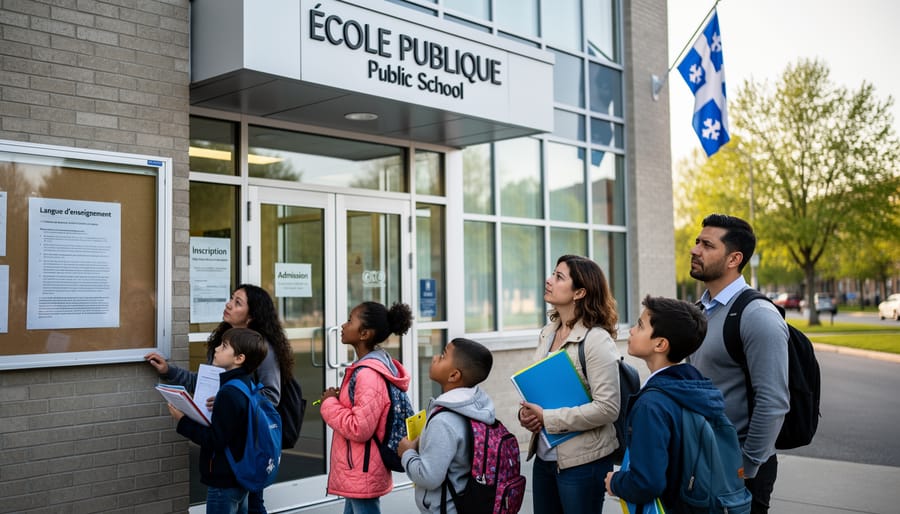
Bill 96, formally known as An Act respecting French, the official and common language of Québec, came into force in June 2022 with the most significant updates to the Charter of the French Language in decades. The amendments aim to strengthen the position of French in all aspects of Quebec life, from education to the workplace.
One major change affects students at English CEGEPs (Collèges d’enseignement général et professionnel). Students attending English-language colleges in Quebec, except those eligible for English elementary and secondary schooling under the Charter, must now complete at least three core courses in French to graduate. These courses count toward their diploma requirements, not as add-ons. The law also freezes English CEGEP enrollment at 2019 levels, capping the proportion of students who can attend English colleges across the province.
In the business world, companies with 25 to 49 employees now face the same French-language obligations previously reserved for larger firms. They must register with the Office québécois de la langue française and demonstrate that French is the normal language of daily operations. Businesses must ensure employees can work in French, provide French-language training materials, and use French in internal communications.
Bill 96 also strengthened enforcement tools. The Office québécois de la langue française gained new inspection powers and can now issue administrative monetary penalties without going to court. Consumers have an expanded right to be served in French, with clearer recourse if businesses fail to comply.
For newcomers who arrived after June 2022, the law imposes a six-month deadline to access government services in languages other than French, emphasizing early French-language integration. These changes reflect Quebec’s commitment to protecting and promoting French as the province’s common public language in an increasingly multilingual environment.
What It Means for You
You have the right to receive services in French from all Quebec government departments, municipalities, and public agencies. If a business serves you only in English when you request French service, you can file a complaint with the Office québécois de la langue française.
In the workplace, you can insist on working in French. Employers with 25 or more employees must obtain a francisation certificate demonstrating that French is the normal language of business. You cannot be required to speak another language for hiring or promotion unless the employer proves the job genuinely requires it. For questions about language rights in employment in Quebec contact the Commission des normes, de l’équité, de la santé et de la sécurité du travail.
For education, your eligibility depends on your citizenship and schooling history. Contact your local school board to confirm which system your child qualifies for. English school boards maintain lists of required documents for certificates of eligibility.
You can access French courses through Francisation Québec, the provincial program offering free classes to permanent residents and some temporary workers. The Office québécois also provides language resources and answers specific questions about applying the Charter of the French Language in daily situations.
Common Questions About Quebec’s Language Laws

Can I send my child to English school if I’m a newcomer to Quebec?
No. Children of newcomers who settle in Quebec after 1977 must attend French-language public schools. This applies to permanent residents, temporary workers, and new Canadian citizens relocating from outside Canada.
Do I need to speak French to work in Quebec?
You have the right to work in French, and employers with 25 or more employees must use French as the working language. While many jobs require French, especially in customer service and public-facing roles, some workplaces operate bilingually or primarily in English, particularly in Montreal’s tech sector and international businesses.
Are private English schools allowed in Quebec?
Yes. Private English schools operate legally in Quebec and are not subject to the same eligibility restrictions as public schools, though they charge tuition. Families who don’t qualify for public English education often choose this option.
What happens if a business doesn’t serve me in French?
You can file a complaint with the Office québécois de la langue française. Businesses must provide service in French, display signage predominantly in French, and ensure customers can conduct transactions in French without penalty or delay.
These questions reflect the most common concerns newcomers and residents raise when navigating Quebec’s language framework. If your situation doesn’t fit neatly into these categories, the Office québécois de la langue française offers personalized guidance through its helpline and website. School boards also maintain dedicated staff to assess eligibility for English-language instruction and explain certificate requirements. Don’t hesitate to contact these resources directly, getting accurate information early prevents complications later, particularly for school enrollment, which operates on strict timelines tied to the academic calendar.
French is Quebec’s official language, protected and promoted by the Charter of the French Language since 1977. This law shapes nearly every aspect of public life in the province, from education access and workplace rights to government services and commercial signage. If you have specific questions about language requirements or your eligibility for English-language education, contact the Office québécois de la langue française or your local school board for personalized guidance and support.